THE CONFUSED LAW OF INDIA

India a magnificent democratic country with beautiful and colourful cultures. But since a few years the travellers who has never visited India specially the women, they are in a doubt if the country is safe for women or not.
Recently, in India we can see that’s there’s a increased of rape cases specially in Delhi which rises a big question to the women safety of the country some of the news media has also called it a Rape capital city of the country but today the news channels of India is more like a fictional drama, than the fact. According to the National Crime Records Bureau on an average, 88 rapes take place every day in India, according to the National Crime Records Bureau (NCRB) data for 2019.
However, the conviction rate is as low as 27.8%. This means, out of 100 accused, only 28 gets convicted.
So, the more serious matter that we need to highlight is almost 72% is released as an innocent which means 72% cases are false. So, our nation is not a capital of rape but it’s a capital of false rape cases which today’s judiciary system should worried about. The defendant should get right to defend himself after the investigation is completely over the defendant should get the right to bail himself, in a terms and condition. The court shall not forget that the subject of bail is protection and not punitive. As the law of our country says that “You are innocent until you are proved guilty.” But in the court of Bengal we can see something opposite which looks like, “ You are guilty until you are proven innocent.” It seems the court is still confused between section 375 of the IPC and 376 of the IPC. As section 375 of the IPC is considered as rape, and Section 376 of the IPC is considered as a punishment of rape but the court doesn’t raises any questions to the investigation team when they see section 376 of the IPC in the charge sheet which rises the question if the court is serious about their work or not.
It is also witness that the bail of the defendant gets reject in section 375 by showing the issue of medical records and records and evidence on the case diary submitted by the investigation team but the court cannot hide the fact that these all are matter of trial and trial in India runs for more than 5 years and sometimes 14 years in some states. If the defendant doesn’t get right to bail himself then how he will collect his defence evidence and the choice of his council?
So, India is actually safe for women but not for men if you look with the fact. The Supreme Court speaks about bail right that bail is rule and jail is exception but it’s just a word uttered from their mouth because even the supreme courts rejects bail heavily and also gives order such as that the petitioner should not come to the Supreme Court for the same case for any request of bail for certain time period which will be decided by the bench and sometimes it also announce the time period of 1 year so this is the reality of the judiciary system of India where the highest court of the nation speaks something and acts something else. May be in future, India may learn and upgrade it’s judiciary system from the country like United States and United Kingdom where judiciary system is more liberal to it’s people.
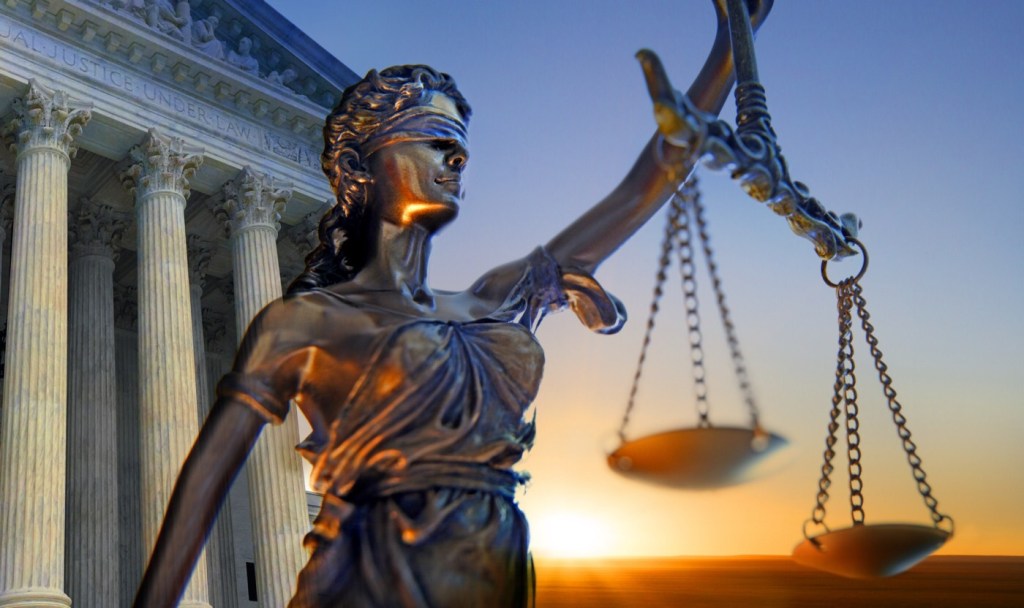
Time to unfold the eyes.

THE SATYA

In November 1998, the then-President of India K.R. Narayanan noted on a file seeking his assent for the appointment of four Supreme Court judges: “It would be consonant with constitutional principles and the nation’s social objectives if persons belonging to weaker sections of society like SCs and STs…are given due consideration. Eligible persons from these categories are available and their under-representation or non-representation would not be justifiable.”

In the recent years, On May 16, West Bengal Chief Minister Mamata Banerjee announced to make Bengali language compulsory in all schools from Class I to Class IX, including private English-medium schools, of the state.

“If the student chooses Bengali, Hindi, English, Urdu , Gurmukhi, Nepali, Alchiki as a first language, he/she may opt for two other languages of their choice. One of the three languages would have to be Bengali. The two other choices are completely dependent on what the student chooses. This method would enable them to reach regional, national and international standards,” she wrote in her Facebook post.

Bengal respects all languages and languages of all States. Our three language formula shows how we really do…India…

Posted by Mamata Banerjee on Tuesday, May 16, 2017

Even though most schools in the state had provisions for teaching language, Bengali as one of the three languages was not mandatory.The government’s move had far-reaching political and social implications than Ms Banerjee could comprehend.

As people of the proposed state of Gorkhaland in the Darjeeling hills officially speak Nepali, the state government’s decision was met with massive hostilityAs the protests in the hill district turned violent, the West Bengal government responded with asking the Centre to deploy the army to bring law and order in the region. The police fired tear gas shells and lathi charged the protesting crowd who tried to break barricades and hurled bricks at the copsCM Banerjee also called for CRPF personnel, including two-all women force. The CRPF on Monday said that the situation is slowly coming under control even as Section 144 of the CrPC was imposed in some areas, and 600 additional paramilitary forces were stationed in the district on Wednesday. The section 144 feels like a disrespect to people in the incident of The Jallianwala Bagh , that took place on 13 April 1919 as the same section 144 was used by the British Raj and even after so many years with so many law minister and being the biggest democracy country of the world our government couldn’t stop the practice of using section 144 with the protesters it seems the government forgets that section 144 breaks the article 19 of our constitution that’s seems like when it come to the government it can break any constitution of India it would be better to re write the article 19 by mentioning that the government and the politicians are exceptions and has every right to break any constitution of India.

Gorkha the forgotten Heroes

In the recent years, On May 16, West Bengal Chief Minister Mamata Banerjee announced to make Bengali language compulsory in all schools from Class I to Class IX, including private English-medium schools, of the state.

“If the student chooses Bengali, Hindi, English, Urdu , Gurmukhi, Nepali, Alchiki as a first language, he/she may opt for two other languages of their choice. One of the three languages would have to be Bengali. The two other choices are completely dependent on what the student chooses. This method would enable them to reach regional, national and international standards,” she wrote in her Facebook post.

Bengal respects all languages and languages of all States. Our three language formula shows how we really do…India…

Posted by Mamata Banerjee on Tuesday, May 16, 2017

Even though most schools in the state had provisions for teaching language, Bengali as one of the three languages was not mandatory.The government’s move had far-reaching political and social implications than Ms Banerjee could comprehend.

As people of the proposed state of Gorkhaland in the Darjeeling hills officially speak Nepali, the state government’s decision was met with massive hostilityAs the protests in the hill district turned violent, the West Bengal government responded with asking the Centre to deploy the army to bring law and order in the region. The police fired tear gas shells and lathi charged the protesting crowd who tried to break barricades and hurled bricks at the copsCM Banerjee also called for CRPF personnel, including two-all women force. The CRPF on Monday said that the situation is slowly coming under control even as Section 144 of the CrPC was imposed in some areas, and 600 additional paramilitary forces were stationed in the district on Wednesday. The section 144 feels like a disrespect to people in the incident of The Jallianwala Bagh , that took place on 13 April 1919 as the same section 144 was used by the British Raj and even after so many years with so many law minister and being the biggest democracy country of the world our government couldn’t stop the practice of using section 144 with the protesters it seems the government forgets that section 144 breaks the article 19 of our constitution that’s seems like when it come to the government it can break any constitution of India it would be better to re write the article 19 by mentioning that the government and the politicians are exceptions and has every right to break any constitution of India.